
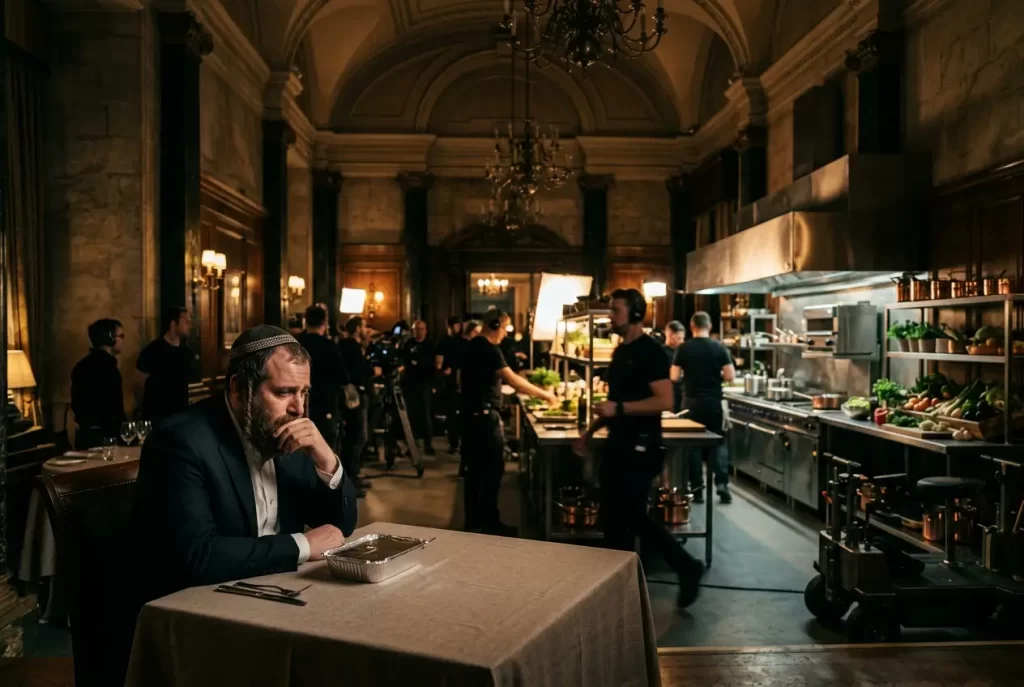
The observant Jewish traveler is probably the most sophisticated, demanding, and calculating tourist in the entire travel industry. While the average vacationer is content to check the weather, the distance to downtown, and a hotel’s Booking.com score, the Orthodox traveler has to manage an entire matrix of risk: from how accessible a property is on Shabbat, to the question of electronic key cards, to the greatest worry of all — what will we eat, and exactly how does the hotel run its kosher operation?
The enormous demand for glatt kosher luxury vacations abroad has, in recent years, produced a wide range of offerings — but along with it, a deep fear of disappointment. We all know, have heard, or have lived through the horror stories ourselves: you arrive at a dazzling five-star resort in Europe, only to discover that the “gourmet kosher meal” you were promised is served cold in sealed aluminum trays that look like military rations, or that the food is cooked in an improvised back kitchen under a bare-minimum, after-the-fact standard of kosher supervision — with a single, exhausted mashgiach trying to fight windmills.
Why does this happen? Because there is a world of difference between a hotel that tries to “improvise” a religious culinary solution and a vacation managed by a professional production company. In this article we’ll open up that logistical wound and understand why truly mehadrin kosher travel abroad demands a comprehensive production operation — not just a mashgiach with a stamp.
The lone-mashgiach illusion: why the old approach no longer works
For many years, the standard model in Orthodox travel abroad was simple: a travel company rented a few dozen rooms in a regular hotel, paid a G-d-fearing kosher mashgiach, and sent him off on his mission. The expectation was that the mashgiach, all on his own, would kasher a corner of the non-Jewish kitchen, supervise the local cooks, and make sure everything ran properly.
In today’s reality, that model is a surefire recipe for both culinary and halachic failure. A kosher supervisor — as skilled and G-d-fearing as he may be — is not a logistics manager, not a menu designer, and not an event producer. When he’s dropped into the kitchen of a massive international hotel staffed by dozens of cooks who don’t speak Hebrew, with no grounding in the laws of meat and dairy, bishul akum, or sifting flour, he finds himself in an impossible defensive position.
To avoid mishaps, the mashgiach is forced to “play it safe” — which immediately translates into monotonous food: cut vegetables, fish wrapped in foil and baked for hours, and cold dishes. The hotel improvises, the mashgiach is worn out, and the guest who paid top dollar gets a bare-minimum experience.
Production vs. improvisation: a side-by-side comparison of two worlds
To make the visual and experiential gap crystal clear — between a hotel that improvises and a luxury vacation produced from A to Z — we’ve gathered the key parameters in the table below:
| Parameter | The improvising hotel | A Shainfeld production
|
|---|---|---|
| Kosher standard | Bare-minimum, after-the-fact; a single mashgiach on the defensive | Uncompromising mehadrin; a full team of supervisors under Rabbi Yaakov Gluskin’s authority |
| The kitchen | A shared corner kashered inside the hotel’s non-Jewish kitchen | Kitchens fully dismantled and industrially kashered before the trip |
| Equipment | Hotel pots and utensils, kashered with difficulty | Brand-new pots, cutlery, and serving ware, never used before |
| The food | Cold, monotonous, industrial catering | A live gourmet experience run by leading Israeli and international chefs |
| The setting | Shared with other, non-kosher guests | Exclusive buyout of the hotel or fully isolated wings |
Behind the scenes of the production: how do you kasher a five-star hotel?
When Shainfeld Tours plans a vacation, the work begins long months before the first guest arrives. This is not merely a culinary undertaking — it’s a complex logistical operation that demands the guiding hand of a production company with deep experience, one that truly understands how luxury travel has evolved and the growing shift from “all inclusive” vacations to “all perfect” ones.
The process involves several critical stages that no lone mashgiach could ever carry out alone:
1. Logistical control and securing the premises
To guarantee a true mehadrin standard, Shainfeld rents the hotels (or entire, fully isolated wings) on an exclusive basis. That means there are no other tourists wandering through the kitchen or dining room with non-kosher food. The entire space becomes a protected Jewish autonomy.
2. Industrial kashering from A to Z
A skilled team of mashgichim, equipped with industrial steamers, blowtorches, and advanced gear, arrives at the hotel many days before the vacation begins. They take the kitchens apart, clean, scrub, and kasher every oven, surface, refrigerator, and prep line. It’s an engineering operation in every sense.
3. A completely new set of kitchenware
Shainfeld does not rely on the hotel’s own utensils that have undergone a complicated kashering. The company flies in and trucks across Europe and the world containers filled with brand-new kitchen equipment: pots, pans, cutlery, plates, glasses, and serving sets that have never been used before.
4. Flying in top chefs and culinary staff
The food on a Shainfeld vacation is not industrial catering. The company leads the modern trend and brings leading Israeli and international chefs to the destination. These chefs run the kitchen and create a genuine glatt kosher gourmet experience — an inside look at the Shainfeld kitchen that manages, time and again, to surprise even the most discerning guests.
A symphony of management: beyond the culinary side
A professional production is measured by its ability to synchronize every corner of the vacation seamlessly. While the kosher and kitchen team works on the meals, the logistics production team adapts the entire hotel to the observant guest:
- Synagogues and minyanim: building beautiful, air-conditioned synagogues within the hotel grounds — complete with an aron kodesh, elegant Torah scrolls, and enough siddurim and chumashim for every guest — plus precise scheduling for prayers and Daf Yomi shiurim.
- Adapting the infrastructure for Shabbat: disabling motion-sensor lighting in the hallways, planning and operating Shabbat elevators with written halachic approval, and converting the electronic room locks to standard mechanical keys for use on Shabbat.
- Content and cultural programming: a family vacation calls for high-quality, tailored entertainment. The production company flies in performers, chazzanim, lecturers, and activity leaders, and builds lavish kids’ clubs (“Shainfeld Kids”) to give parents real rest. This is exactly the Shainfeld standard — mehadrin glatt kosher gourmet at the world’s finest luxury hotels — that sets it apart from any other solution on the market.
In summary: don’t gamble with your vacation
The bottom line: taking a vacation overseas is a significant emotional and financial investment. When you choose a vacation built on improvisation, you’re gambling with your peace of mind, with the quality of your children’s food, and with the level of kosher observance you’re committed to.
An experienced production company like Shainfeld Tours takes every question mark and turns it into an exclamation point. More than 30 years of accumulated experience allow us to manage the most complex operations in the travel world — so that you can arrive at the resort, leave your worries behind, and simply enjoy a real vacation. We invite you to see the events and vacations we’ve produced with your own eyes, through the stunning gallery on our website. Don’t gamble with the kosher and gourmet standards you and your children deserve. For the full menu, a rundown of upcoming destinations, and a glimpse of the uncompromising mehadrin standard of a Shainfeld vacation, leave your details here on our contact page, and our vacation specialist will get back to you with everything you need to know.